The Learning Fractals - Efficient Learning In The Age of AI

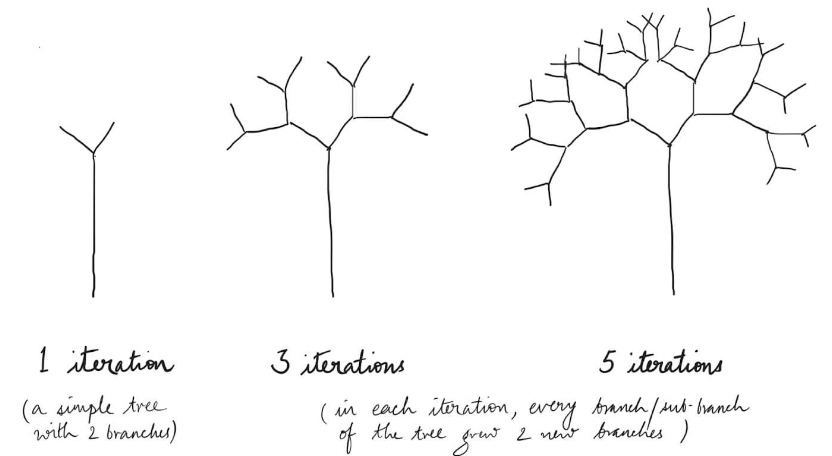
The Learning Fractals: A Playbook for Perpetual Learners on Digital Journeys, authored by Anubhav Pradhan and Sekhar Subramanian, introduces a transformative framework for navigating the volatility of the digital age. The book argues that the vast complexity of modern technology is actually composed of "fractals": self-similar, repeating patterns that exist at every scale of a digital ecosystem. By mastering these foundational patterns rather than chasing individual tools, practitioners can achieve a state of "perpetual learning," allowing them to simplify complexity, accelerate skill acquisition, and glide effortlessly across the ever-shifting tech landscape.
The Talent Debt
As an engineering leader, you are currently navigating a paradox: your team’s technical velocity is at an all-time high, yet the "half-life" of their specific skills has never been shorter. In our current environment, specialized knowledge in a specific framework, once a decade-long career anchor, now depreciates in as little as eighteen months. This creates a systemic risk I define as "Talent Debt." Just as technical debt slows your codebase, talent debt slows your roadmap because your engineers are constantly playing catch-up with the latest AI model or cloud primitive. The Learning Fractals offers a sophisticated, pattern-based solution to this crisis. It suggests that
the secret to scaling an engineering organization in the age of AI isn't in learning more tools, but in mastering the "fractal" nature of digital architecture.
The digital world is not a collection of disparate silos, but a series of self-similar, repeating patterns. To an untrained eye, a legacy monolith, a microservices mesh, and a generative AI pipeline look like three different universes. However, through a "fractal lens," an engineer sees the same fundamental principles of data ingestion, state management, security, and interface logic repeating at different scales. When your engineers learn to recognize these fractals, their "Learning Agility" skyrockets. They stop seeing a move from Python to Mojo, or from REST to GraphQL, as a total rebuild of their knowledge base. Instead, they recognize the "base pattern" they already know and simply adjust for the new scale and syntax. This "gliding" effect is what separates a high-performing, adaptable engineering culture from one that is brittle, resistant to change, and ultimately expensive to maintain.
AI: A New Layer of an Existing Pattern
Nowhere is this fractal approach more critical than in our current pivot toward Artificial Intelligence. The sheer volume of new AI developments, LLMs, SLMs, RAG architectures, and agentic workflows, can induce a state of "analysis paralysis" in even the strongest engineering teams. If we approach AI as a series of disconnected tools to be mastered one by one, we will fail; we simply cannot hire or train our way out of that cycle. Instead, we must apply the book’s principles to deconstruct AI into its fundamental building blocks.
In the fractal model, AI is simply a new layer of an existing pattern. Prompt engineering is not a "magic trick"; it is a recursive logic pattern similar to high-level programming. Vector databases are not an entirely new concept; they are a specific "fractal" of data storage and retrieval patterns we’ve utilized for decades. When we frame AI through this lens, we lower the cognitive load for our developers. We empower them to see that an AI agent is effectively a recursive function with a broader set of variables. By mastering these underlying harmonies, your team moves from being "users of AI" to "architects of intelligence." They become perpetual learners who don't fear the next version of a model because they understand the logic that governs all models.
Operationalizing the "Learning Rhythm"
The most actionable takeaway for an executive is the transition from "Event-Based Learning" to a "Learning Rhythm." Traditionally, engineering departments treat upskilling as an annual event: a certification, a conference, or a week-long bootcamp. The Learning Fractals argues that this is fundamentally mismatched with the speed of digital journeys. For an engineering organization to thrive, learning must be integrated into the operational cadence of the business, becoming as routine as a stand-up or a code review.
As Head of Engineering, your goal is to nurture a "Learning Ecosystem" where knowledge flows recursively. This means incentivizing "Fractal Thinking" during peer reviews and asking not just "Does this code work?" but "Does this follow the repeating patterns of our architecture?" It involves creating small, high-frequency learning loops where engineers share how a pattern learned in a front-end framework was successfully applied to a back-end data pipeline. When you establish this rhythm, you aren't just building a product; you are building a self-evolving organism. You are creating a team that possesses the resilience to handle the AI shift and whatever "black swan" technology comes after it.
Recognizing Learning Patterns
Ultimately, The Learning Fractals provides the blueprint for a competitive advantage that cannot be easily disrupted.
In a world where AI can write code, the value of an engineer shifts from "syntax expertise" to "architectural pattern recognition."
By adopting a fractal-inspired playbook, you ensure your organization doesn't just survive the digital journey but leads it. You move from a state of constant "re-skilling" to a state of "perpetual growth," where every new technological wave, no matter how complex, is seen as a familiar pattern waiting to be mastered.
This is the shift from being a reactive engineering department to becoming a proactive, agile powerhouse. By fostering a culture that loves the logic and harmony of technology, you set your team up to thrive in the ever-changing digital landscape, ensuring that your organization remains at the cutting edge of innovation without the risk of burnout or obsolescence.